
A fresh take on jazz
Over the years, my albums have accumulated quietly: composed, recorded and produced on my own terms, released into a world that was under no obligation to notice. The early ones were reviewed well, in the Netherlands and internationally, including Downbeat, Jazz Times, Cadence, Jazzpodium, NRC Handelsblad, the Penguin Guide to Jazz, among others. The later ones less so, as the music world moved on to other things. That’s the nature of the business.
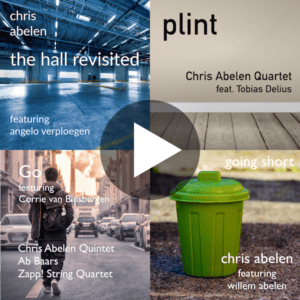
A Fresh Take on Jazz is my attempt to tip the odds slightly. I’ve gone back through the catalogue and picked the tracks I’ve always felt were the most direct, the most immediate: the ones where the melody does the heavy lifting and the groove is hard to ignore. Call them my idea of hits, for what that’s worth in jazz.
Each single gets a new cover and a fresh release on all streaming platforms. The music itself is unchanged (why fix what isn’t broken?), but hopefully a few more ears will find it this time around.
Alongside the reissues, a couple of brand new tracks have found their way in too, Matching and Going Short, the first two singles from a new project, The Joy of an Empty Trash Can, still in progress. Same idea, same audience, just written now instead of dug up.
To go with the series, I’ve put together a playlist, A Fresh Take on Jazz mixes re-released catalogue tracks with more recent material, jazz and funk, old and new, back to back, the way it should be heard. Available on all major streaming platforms.
The Hall Revisited
Originally released as The Hall with the Seven Doors on Dance of the Penguins (1996)
Every composer has a piece that started somewhere specific. For me, The Hall started in a hallway, or more precisely, in the hallway of our first rented flat in Amsterdam Zuidoost. It was a modest place by any measure [read more]
GDP
Originally released on A Day at the Office (2016)
The idea for the mini opera came first, somewhere in the dunes near Bloemendaal, on one of my weekly runs there. A Day at the Office came next: purely instrumental, written and produced while Bastiaan was already starting on the lyrics for what would become Songs on the Eve of Dismissal, now living on as Cubicle Life and Time to Disappear. [read more]
Plint
Live recording, originally for VPRO radio (1994)
Plint is a tribute to Sonny Rollins, who passed away this year. It was written with St. Thomas in mind, not the notes themselves, but the idea behind it, a calypso, that particular lightness Rollins made sound so effortless. My own version runs eleven bars, unusual by any normal measure, something like a blues with the fourth bar quietly removed. [read more]
It’s Time to Say Goodbye
Originally released on A Day at the Office (2016)
The idea was simple: write something genuinely accessible for the holiday season, after a long year of office work, the kind of tune that doesn’t ask much of the listener and just lets them exhale a little. Most of my pieces start with the melody, that’s usually where everything else follows from, but this one started somewhere else entirely, [read more]
Matching
From the forthcoming album The Joy of an Empty Trash Can, the first single to see daylight
Matching, the new single from The Joy of an Empty Trash Can, puts Chris Abelen’s trombone in the lead, with Willem Abelen answering on soprano saxophone through echoes and sustained long notes. As with the rest of the project, it’s built as a play-along: sheet music and free backing tracks, made with BIAB and Logic samples, so you can pick up your own instrument and join in. [read more]
My Tie
Originally released on Space (2004)
It’s from the album Space, recorded with my quintet, Ab Baars on clarinet, and the Zapp! string quartet.
What made that quartet unusual, and it’s worth pausing on, is that they improvise as well, genuinely rare for string players, classical training generally points people the other way entirely. [read more]
Hoover
Originally released on Dance of the penguins (1995)
Hoover was my first serious composition, written for my final exam at the Sweelinck Conservatory in Amsterdam, now the Conservatorium van Amsterdam. We were the first group of students to actually reach that exam. Plenty of others didn’t bother, a few years without finishing anything was considered perfectly acceptable, [read more]
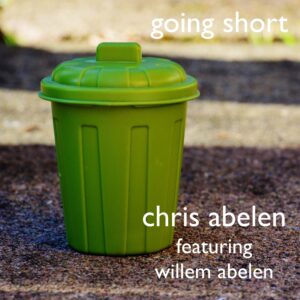
Going Short
From the forthcoming album The Joy of an Empty Trash Can, the second single to see daylight
Going Short, from the forthcoming album The Joy of an Empty Trash Can, puts Willem Abelen’s soprano in the lead, carrying the theme and the solo both. My own contribution is considerably more modest: one note, a long A, held through the second and third repeats of the theme. As an elder in the room, you’re supposed to know when it’s time to step back a little. I took the hint literally. [read more]
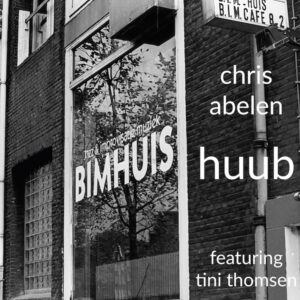
Huub
Originally released on A Day at the Office (2016)
Huub is Huub van Riel, the BIMhuis’s first manager, for many years the person running the place. A nice guy, still is, though he could be remarkably vague when it suited him. I sat on the board of SJIN, the Foundation for Jazz and Improvised Music in the Netherlands, for a while, and there were some genuinely difficult stretches with Huub during that time, [read more]
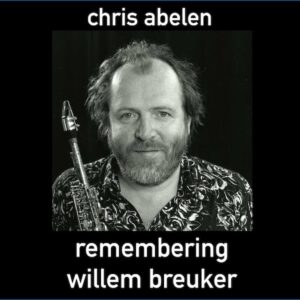
Remembering Willem Breuker
Originally released as Remembering Willem B on A Day at the Office (2016)
This one comes out of years of working closely with Willem Breuker, the composer, saxophonist, and bandleader who passed away in Amsterdam in 2010. I spent three and a half years as a member of the Willem Breuker Kollektief, and stayed close to him afterward too, right up until his death, taking on the job of instrumenting his new compositions as they came in. [read more]
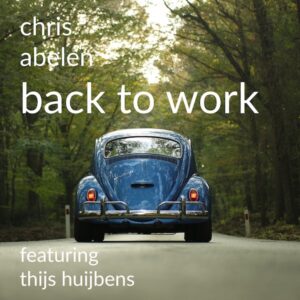
Back to Work
Originally released on A Day at the Office (2016)
The natural companion to It’s Time to Say Goodbye, and it plays like one. Full, busy arrangement at the start, alto and trumpet chasing each other through fast sixteenth notes, the sound of Monday morning arriving whether you’re ready or not. Then, somewhere in the middle, it stops [read more]
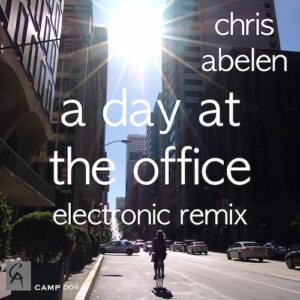 A Day at the Office (Remix)
Originally released on A Day at the Office (2016)
The one outlier in this whole series, the only track here that’s been run through a proper electronic overhaul rather than just reissued or lightly rearranged. I took the title track from A Day at the Office and put it through every kind of effect Logic had to offer. [read more]
 Delay
Delay
Originally released on Dance of the penguins (1995)
The idea came from Miles Davis. In the eighties he’d sometimes play synthesizer too, and with that famously disinterested look of his, he’d occasionally hit a key and just leave it down, far too long, even straight through someone else’s solo. He was the boss, after all, who was going to stop him. [read more]
 More Circus
Originally released on A Day at the Office (2016)
Floris van der Vlugt carries both the theme and the opening solo on soprano sax here, and after a few choruses the other three horns join in one by one, building toward a climax before the theme suddenly returns, as if nothing happened. [read more]
 Go
Go
Originally released on Space (2004)
A Corrie van Binsbergen guitar feature, and it opens carefully, the theme in c minor with the strings playing something close to pling-ploing pizzicato underneath, in a different time signature entirely from what’s happening above it. [read more]
 Bye Bye Bloomingdale
Bloemendaal, translated loosely into English, becomes something like Bloomingdale, flower valley either way, which is where the title comes from. Not a department store reference, just the actual meaning of the place we left, dressed up in English for the occasion. [read more]
 Fix
Fix
Originally released on A Day at the Office (2016)
A loose blues form, though every bar runs twice as long as you’d expect from one, with a few chord changes shifted along the way too. Somehow it still holds onto a kind of funk-blues feeling underneath all that, [read more]
 008
008
Originally released on Space (2004)
A small nod to its far more famous predecessor, though not exactly an opening theme for a 007 film, more a handful of chord progressions that gesture faintly in that direction without ever fully committing to it. [read more]
 Fleet Street
Originally released on What a Romance (1999)
First recorded on Dance of the Penguins, where Tobias Delius took the solo. This time around it’s my turn instead. We never pinned solos down in advance, mostly it came down to whoever felt like jumping in when the moment arrived. [read more]
 On the Beach / In the Deep Blue Sea
Originally released on Space (2004)
A companion pair, both tied to a small home-movie project from 2011. I drove out to the beach near Bloemendaal one day and took the train into Amsterdam Central Station the next, filming both, a slightly affectionate joke at my father’s expense, [read more]
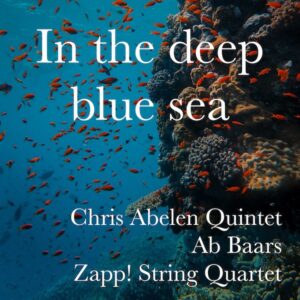 In the Deep Blue Sea/On the Beach
Originally released on Space (2004)
A companion pair, both tied to a small home-movie project from 2011. I drove out to the beach near Bloemendaal one day and took the train into Amsterdam Central Station the next, filming both, a slightly affectionate joke at my father’s expense, [read more]